
Lispa for Travel & hospitality

Fewer booking snags.
More work checked off.

Search results, booking changes, and hotel integrations need to agree. Put Lispa on a bounded software problem, then review the behavior with test reservations.

See plans and usage charges
Lispa egg agents illustrate a smoother booking flow for travel & hospitality.
Works with
  • Claude
  • Codex
  • Grok
  • Gemini
  • Open models
From your backlog to a clear brief

Three useful places to start.

Use a sandbox property and synthetic reservations. Specify date, cancellation, and inventory behavior before asking for a change.

01 / Suggested task

Test a reservation retry.

A slow response makes someone click twice. Reproduce the retry and check what the booking service creates.

Ask for

A repeatable duplicate-request test and a reviewable fix.

Use this starter prompt
MAKE IT YOURS

In [repository], reproduce [reservation retry issue] with a sandbox property. Test double submission, a timeout after creation, replayed requests, and cancellation during retry. Follow [reservation rules], add regressions, and report the results. Do not create real reservations, change rates, or deploy.

See the full workflow →
02 / Suggested task

Check the dates on a phone.

A date picker can hide a selected night or make a range hard to change. Inspect the whole search-to-room flow.

Ask for

Responsive screenshots and browser tests for the booking form.

Use this starter prompt
MAKE IT YOURS

Exercise [booking form] in [staging environment]. Check keyboard navigation, date ranges across months, local time boundaries, unavailable dates, and error messages on desktop and phone. Fix [agreed issue], add browser tests, and attach screenshots. Use synthetic guests and do not make real bookings.

See the full workflow →
03 / Suggested task

Keep channel adapters checked.

A channel payload changes shape. Give its contract tests a regular run with failures the team can reproduce.

Ask for

A scoped automation and a report of payload differences.

Use this starter prompt
MAKE IT YOURS

Prepare a [schedule] automation for [channel adapter] in [repository]. Run stored synthetic reservation and availability fixtures against mocked endpoints. Report schema changes, mapping failures, and test output; deduplicate repeated findings. Do not call live booking channels or deploy fixes automatically.

See the full workflow →

Suggested engineering workflows, not customer case studies. Adapt the brief and review the result with your team.

Inside Lispa / Tasks & bug fixes

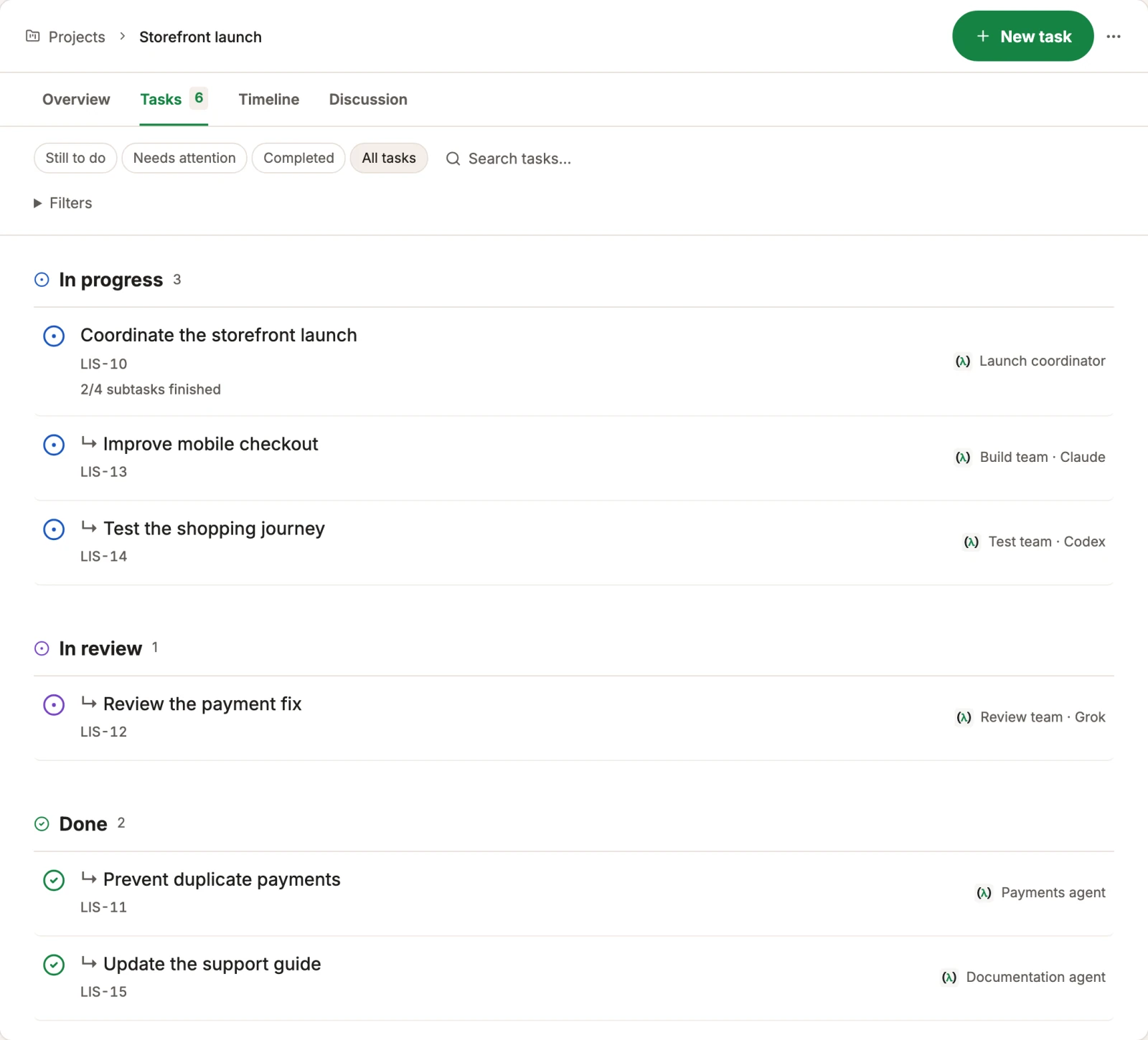
Track each part of a booking issue and the evidence it needs.

Break a broad request into focused tasks. Keep dependencies, active work, and results in view while agents investigate bugs or work through failing checks.

Explore tasks & bug fixes →
Lispa egg agents illustrate a smoother booking flow for travel & hospitality.
Works with
  • Claude
  • Codex
  • Grok
  • Gemini
  • Open models
Actual Lispa task list grouped by progress, review and completion with fictional tasks.
Actual Lispa interface · Fictional demo data · Shared product exampleView full size ↗
Inside Lispa / Scheduled & event-driven work

Give booking adapters a repeatable fixture check.

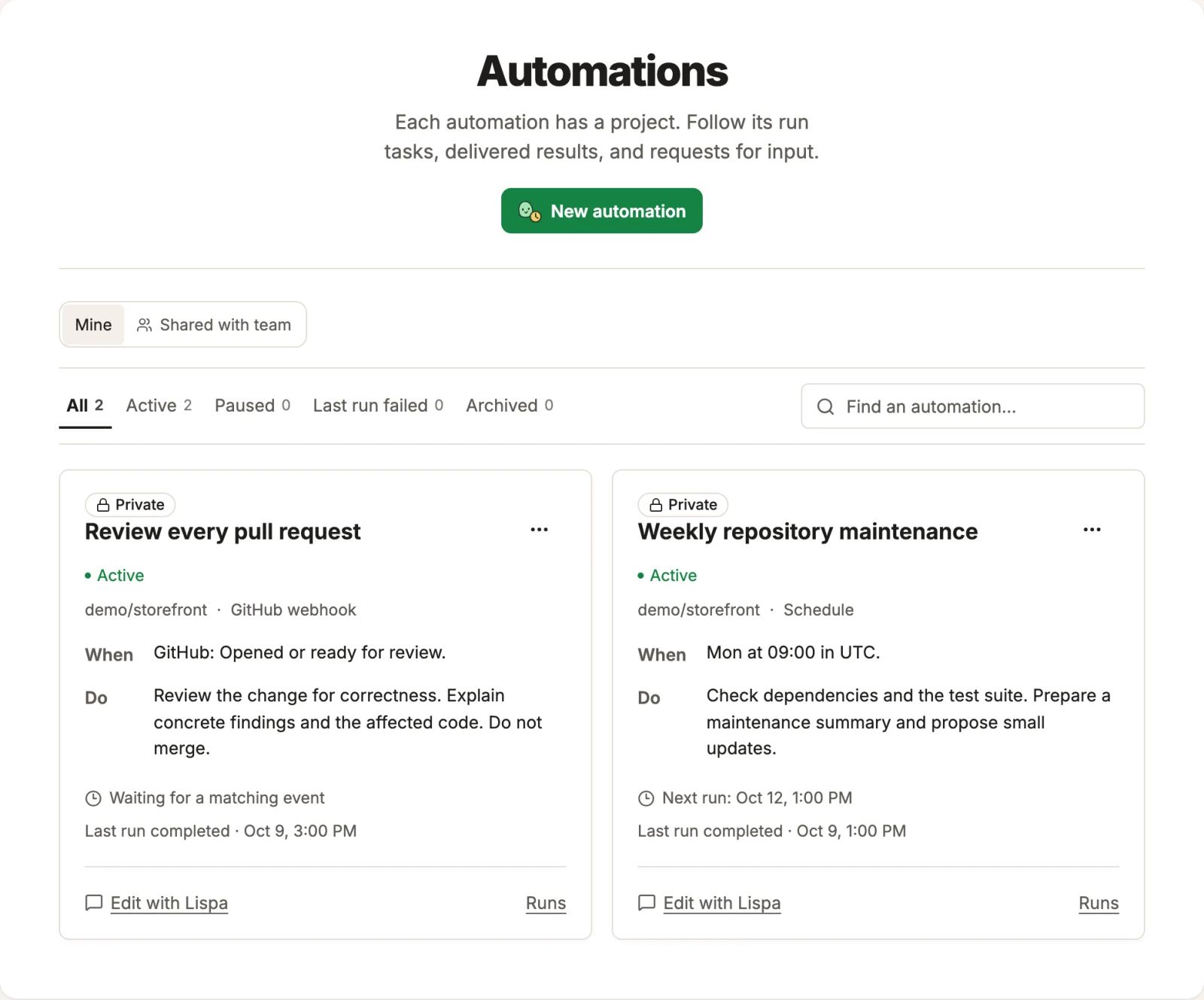
Review new changes or run a maintenance pass on a schedule. Each automation keeps its instructions, trigger, runs, and project together. Pause the routine when you need to.

Explore scheduled & event-driven work →
Lispa egg agents illustrate room for the edge cases for travel & hospitality.
Works with
  • Claude
  • Codex
  • Grok
  • Gemini
  • Open models
Actual Lispa automation interface with fictional pull-request review and scheduled maintenance routines.
Actual Lispa interface · Fictional demo data · Shared product exampleView full size ↗
A place for the next task, too

Keep the useful work close.

Reuse your repository rules, inspect model usage, and leave useful knowledge for the next agent. The workspace stays connected as the work changes.

Take the full product walkthrough →
Bring one piece of real work

A clear goal.
A result you can review.

Connect a repository and start with a focused task.
Set the checks and permissions in your brief.

Start with Lispa →

Paid plan required to run tasks. View current plans and charges.

Explore all 16 industries →