From idea to implementation
That next feature?
Give it a team.
The API, the interface, the tests. Give Lispa the outcome you want, and let agents work through the pieces while you keep your own work moving.
From $20/month, with $20 in usage credits. More signup options

 Claude
- Codex
- Grok
- Gemini
- Open models
A small feature still has a lot of moving parts.
An export button needs more than a button. There is a query to get right, permissions to respect, an empty state to design, and a test to keep it working. Hand over that whole slice of work.
“Add a CSV export to the orders page. Respect the active filters and account permissions. Cover empty results and large exports. Prepare the change for review.”
- 01API
Export respects filters and account scope.
- 02Interface
Button, loading state, and empty-state message.
- 03Checks
Tests for permissions and empty results.
Follow the pieces as they come together.
Work sessions keep the coordinator, implementation, testing, and review tasks within reach. Open a session to follow the work or give a more specific direction.
Try it with your own task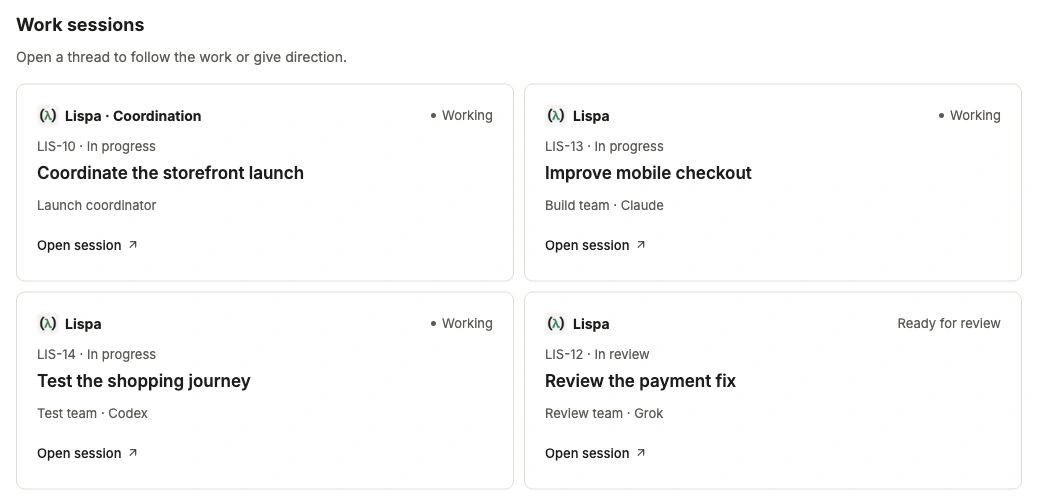
A clear brief.
A result you can check.
- 01
Start with the outcome.
Name the user, the behavior, and the limits. Link the relevant files or explain where the feature belongs.
- 02
Let the pieces move together.
A coordinator can split independent implementation, testing, and documentation work across agents. Dependencies stay part of the plan.
- 03
Review one coherent result.
Inspect the changes and checks, ask for follow-up work, and decide when the feature is ready to ship.
The work has a home.
From the first brief to the next useful lesson. Take a look around the workspace.
Explore the full illustrated walkthroughOne place for the whole project.
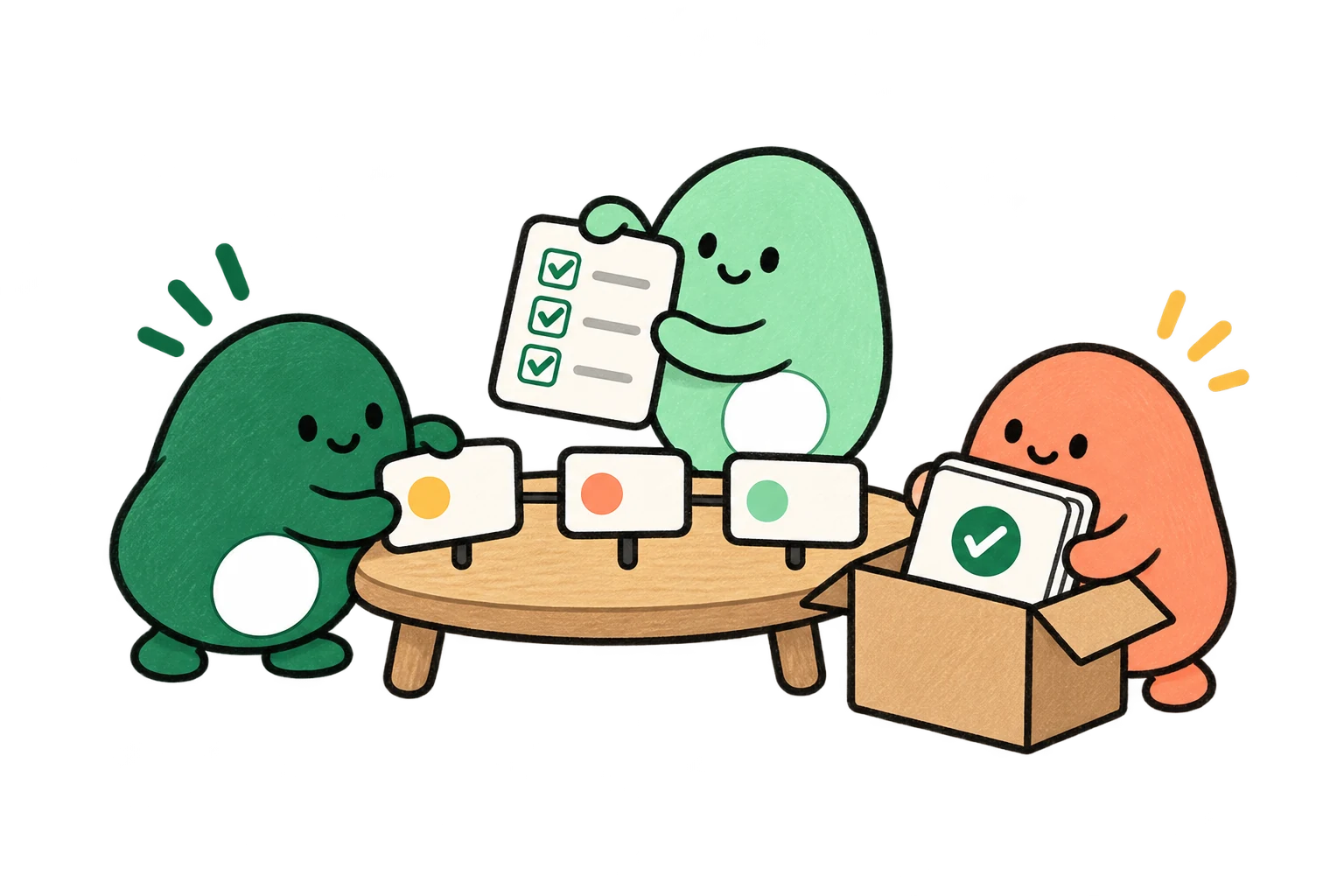
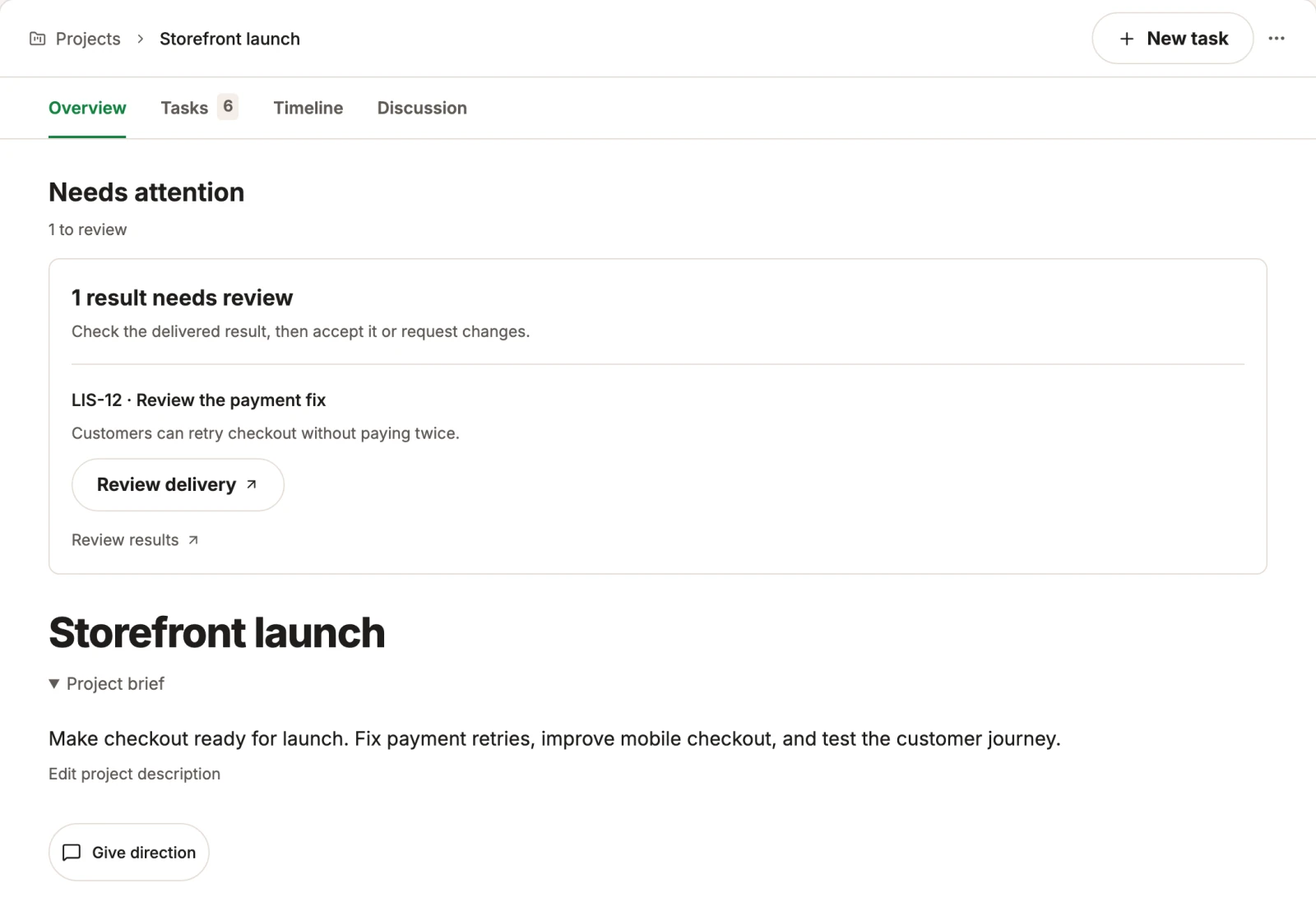
Keep the brief, the work in progress, and the results ready for review together. Give direction without starting the explanation again.
- Claude
- Codex
- Grok
- Gemini
- Open models
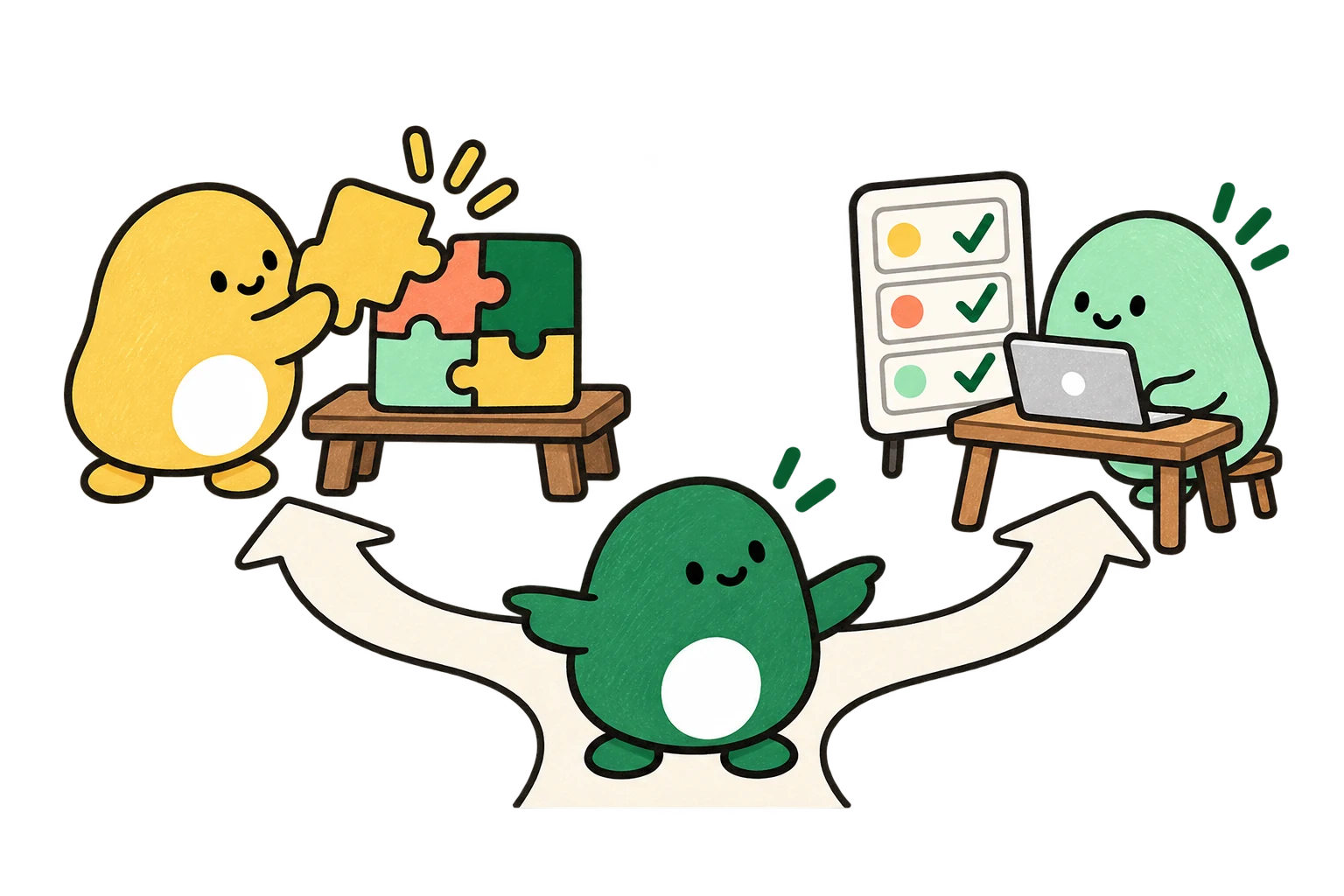
Match the model to the moment.
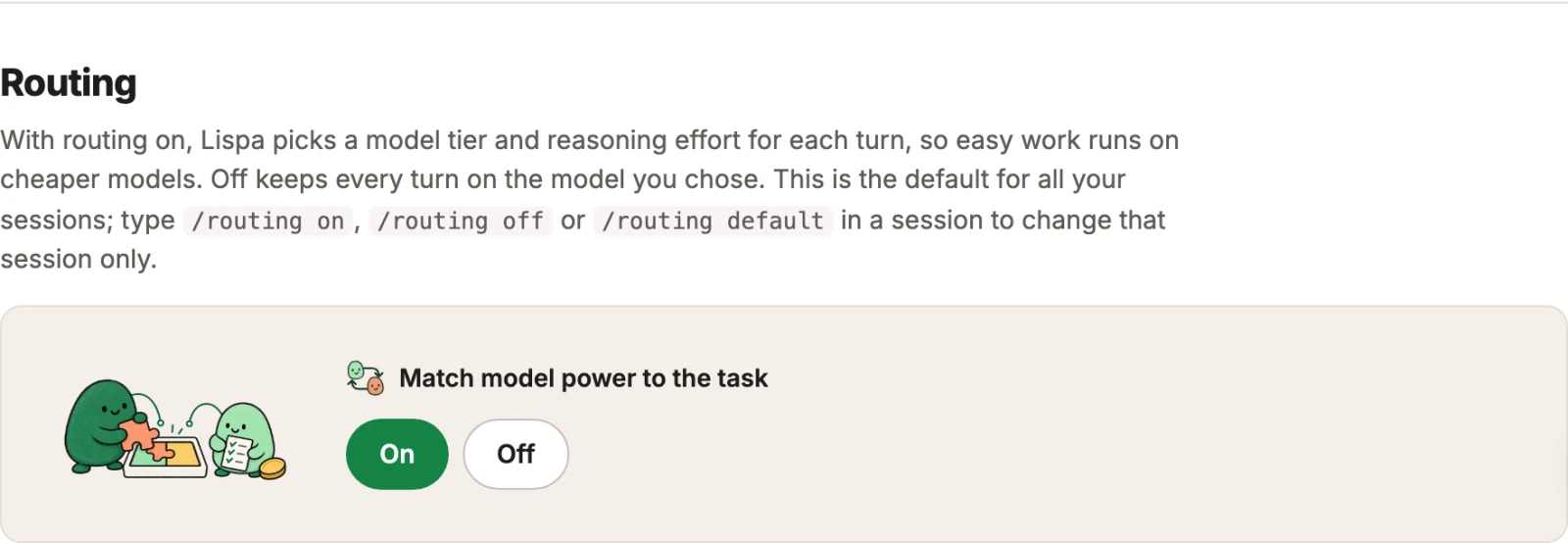
Let Lispa choose model power and reasoning effort for each turn, or keep the model you picked. Change the default or adjust an individual session.
- Claude
- Codex
- Grok
- Gemini
- Open models
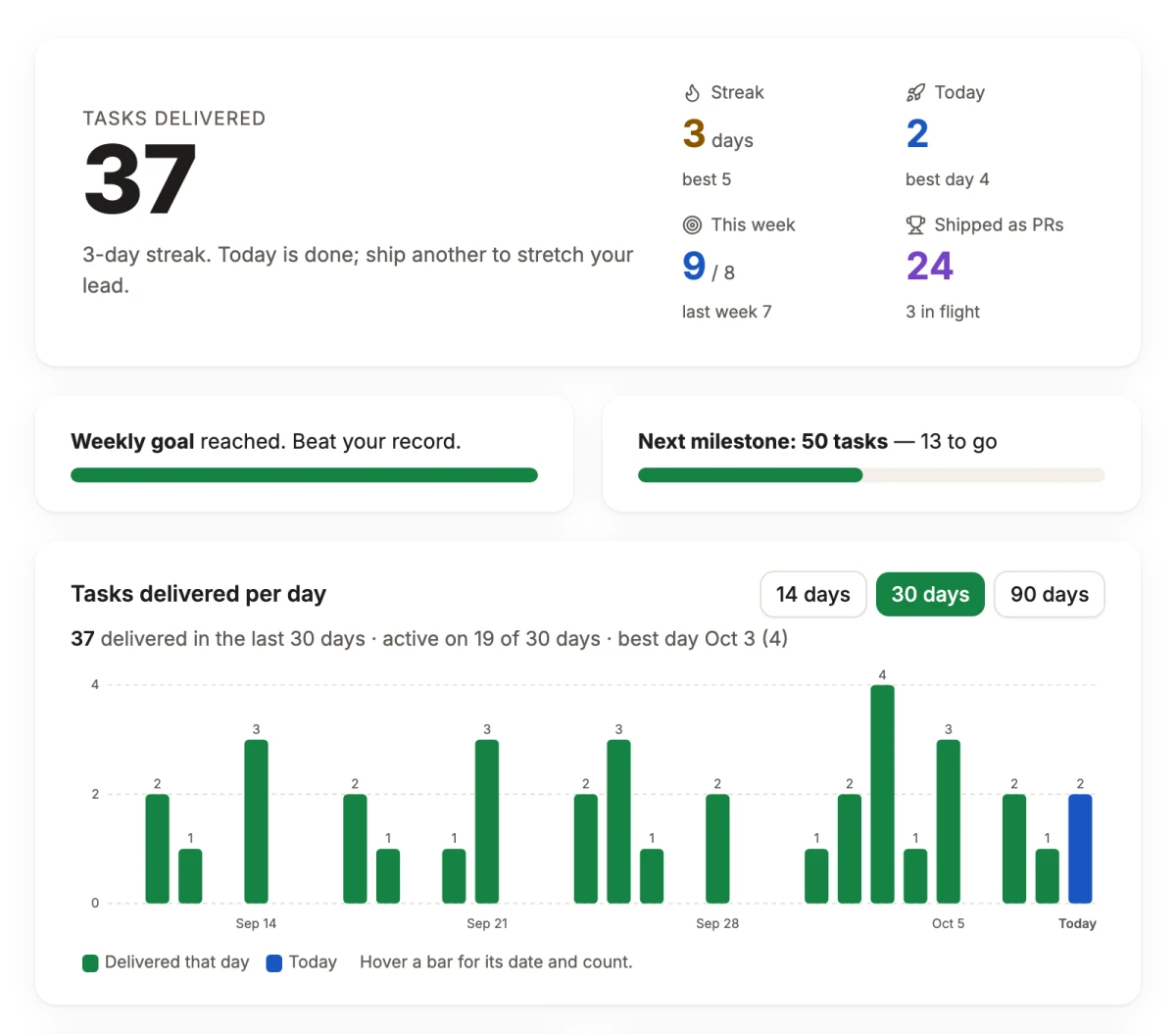
Our delivery dashboard started as a Lispa task.
We asked Lispa to build a dashboard for delivered tasks, daily activity, and progress toward goals. The implementation went through a pull request and became part of the product.
The screenshot shows the shipped interface populated with demo data.
A useful first task,
ready to make yours.
Replace the brackets, paste into a Lispa chat, and keep the scope small enough to review.
- A change on a branch you can inspect
- Tests for the behavior you requested
- A summary of decisions and remaining gaps
Implement [feature] in [repository/branch]. First inspect the existing patterns and propose a short plan. Acceptance criteria: [expected behavior and edge cases]. Coordinate independent work where useful, add tests, and run the relevant checks. Show the diff, test output, and anything still unverified. Do not merge.
Start a task in LispaCan Lispa work in an existing application?
Yes. Connect your repository and point it at the relevant branch. Include your conventions and acceptance criteria so the work follows your application’s patterns.
Do I need to split the feature into tasks myself?
You can provide a task list, or ask a coordinating agent to propose one. Small, explicit acceptance criteria make the result easier to check.
Does every feature use several agents?
No. Parallel work is useful when the pieces are independent. A small change may be better handled by one agent.
Can I use my existing model plan?
You can connect a supported Claude or ChatGPT plan, a provider API key, or use Lispa’s models with credits. Provider limits still apply. Cloud machines and Lispa services consume credits even when you bring a plan.
Give the next feature a head start.
Connect your repo. Describe the work.
Come back to a result you can inspect.
Lite starts at $20/month with $20 in usage credits.
Paid plan required to run tasks. Cancel any time.