Make room for what comes next
Less “we should”.
More cleaned-up code.
That old API. Those repeated patterns. The upgrade you keep putting off. Give Lispa a bounded migration and a clear definition of what must keep working.
From $20/month, with $20 in usage credits. More signup options
 Claude
- Codex
- Grok
- Gemini
- Open models
The change is simple. Until the tenth call site.
Replacing a shared client means finding every caller, understanding its error handling, and checking the behavior on both sides. Let an agent work through the repetition while you review the design.
“Replace the legacy orders client with the new shared client. Preserve retries, pagination, and error behavior. Migrate one module first and show the checks before expanding.”
- 01Inventory
Call sites and behavior differences mapped.
- 02First slice
One module updated, with focused tests.
- 03Next step
Remaining callers listed for review.
Keep each slice of the migration visible.
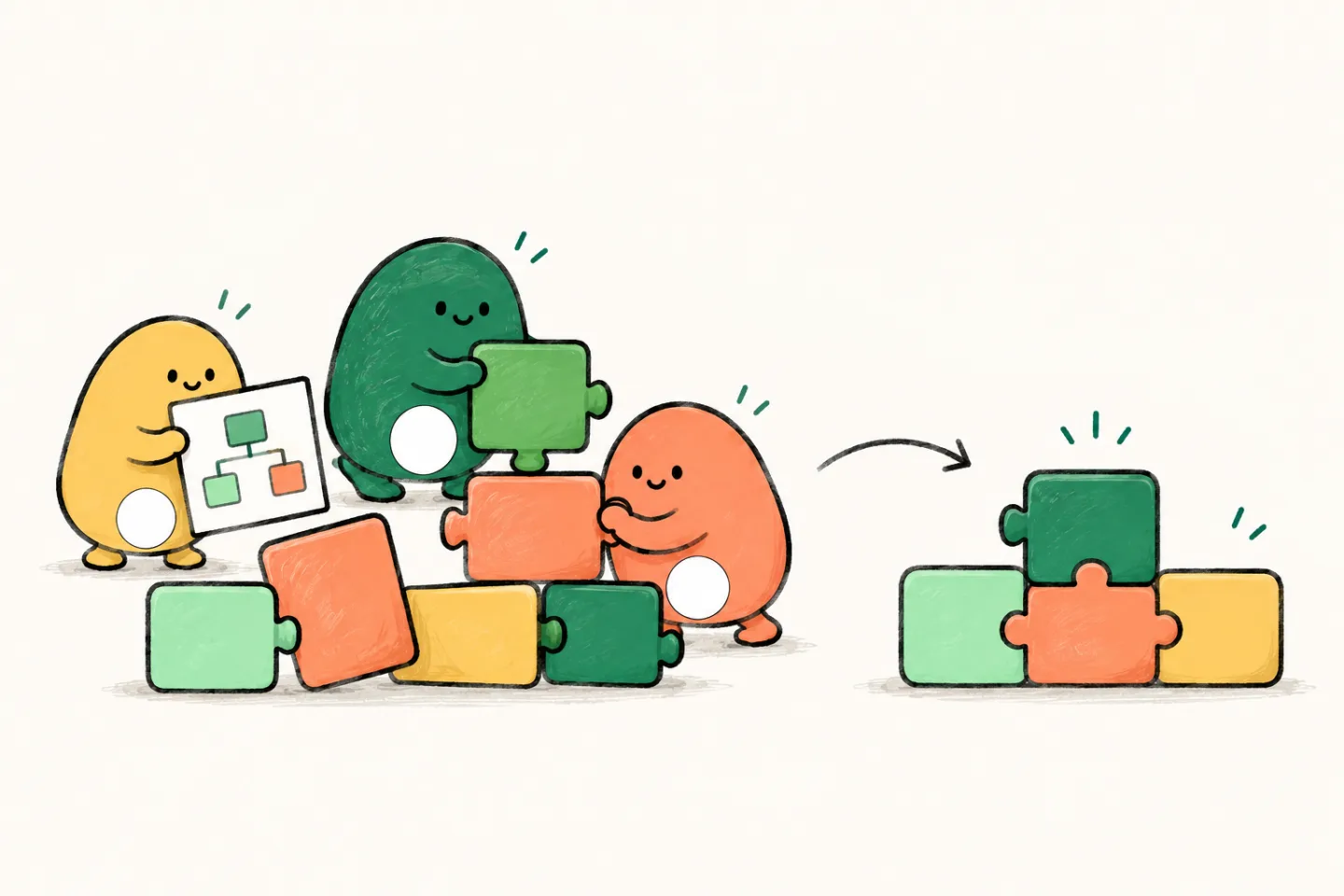
Use separate work sessions for implementation, checks, and review when the work can be split. Open the relevant session to inspect progress or narrow the next step.
Try it with your own task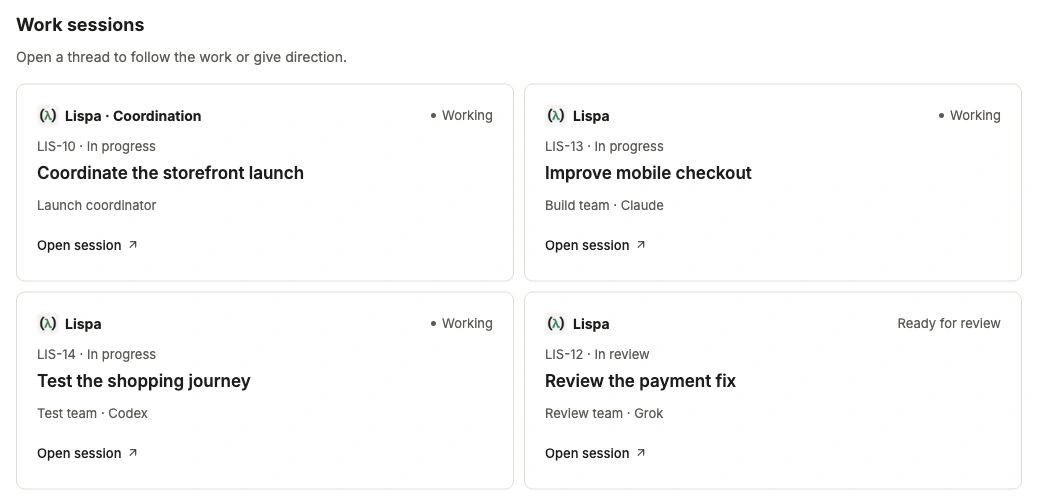
A clear brief.
A result you can check.
- 01
Name the boundary.
Specify the old and new patterns, target version, and behavior that must stay the same. Start with a manageable slice.
- 02
Map before changing.
Ask Lispa to inspect callers, tests, and the target API. Review its plan before a broad migration.
- 03
Verify as you go.
Move through the agreed scope with type checks and tests. Request a list of leftovers, changed behavior, and follow-up work.
The work has a home.
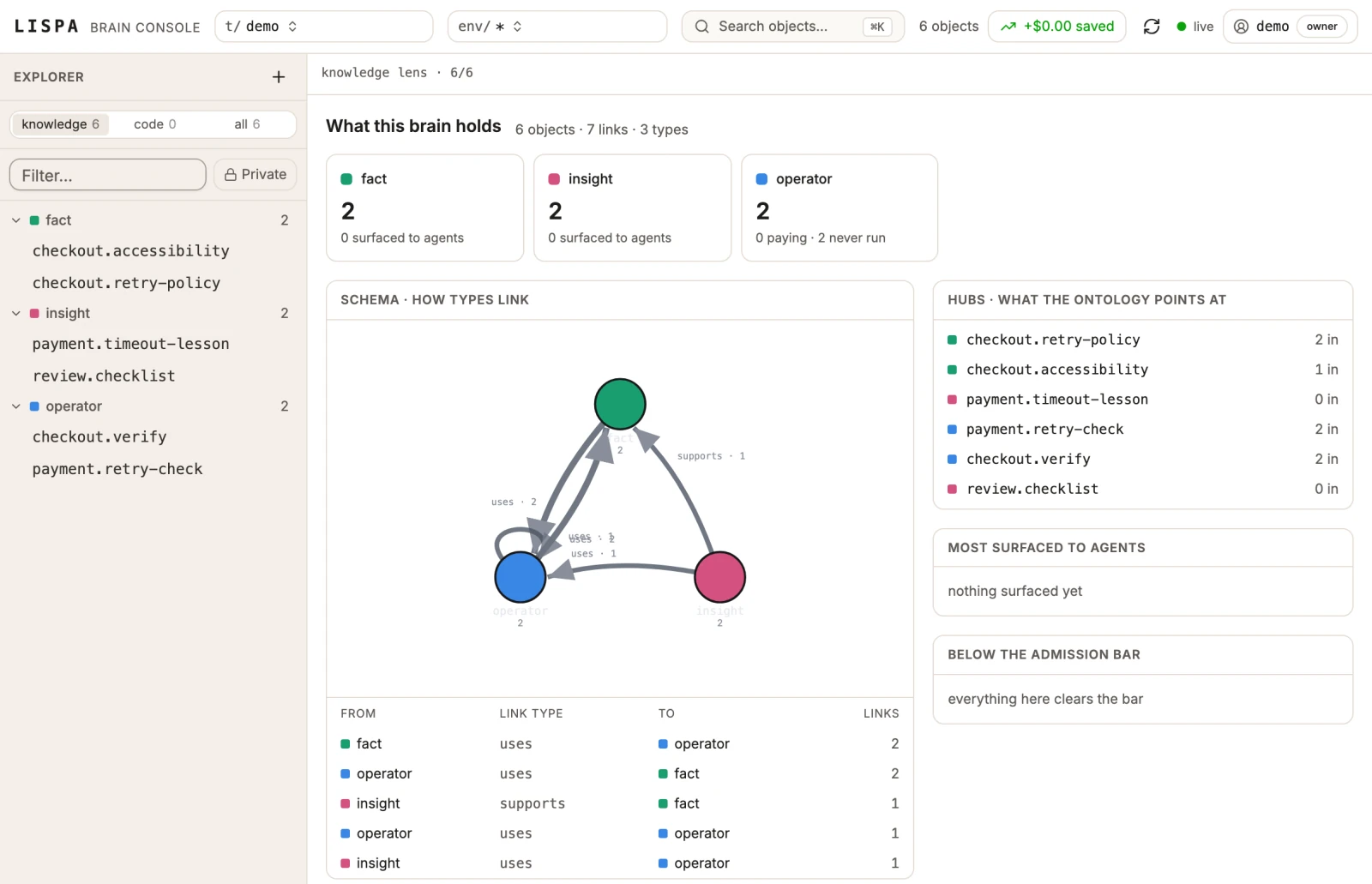
From the first brief to the next useful lesson. Take a look around the workspace.
Explore the full illustrated walkthroughLeave the next agent a head start.
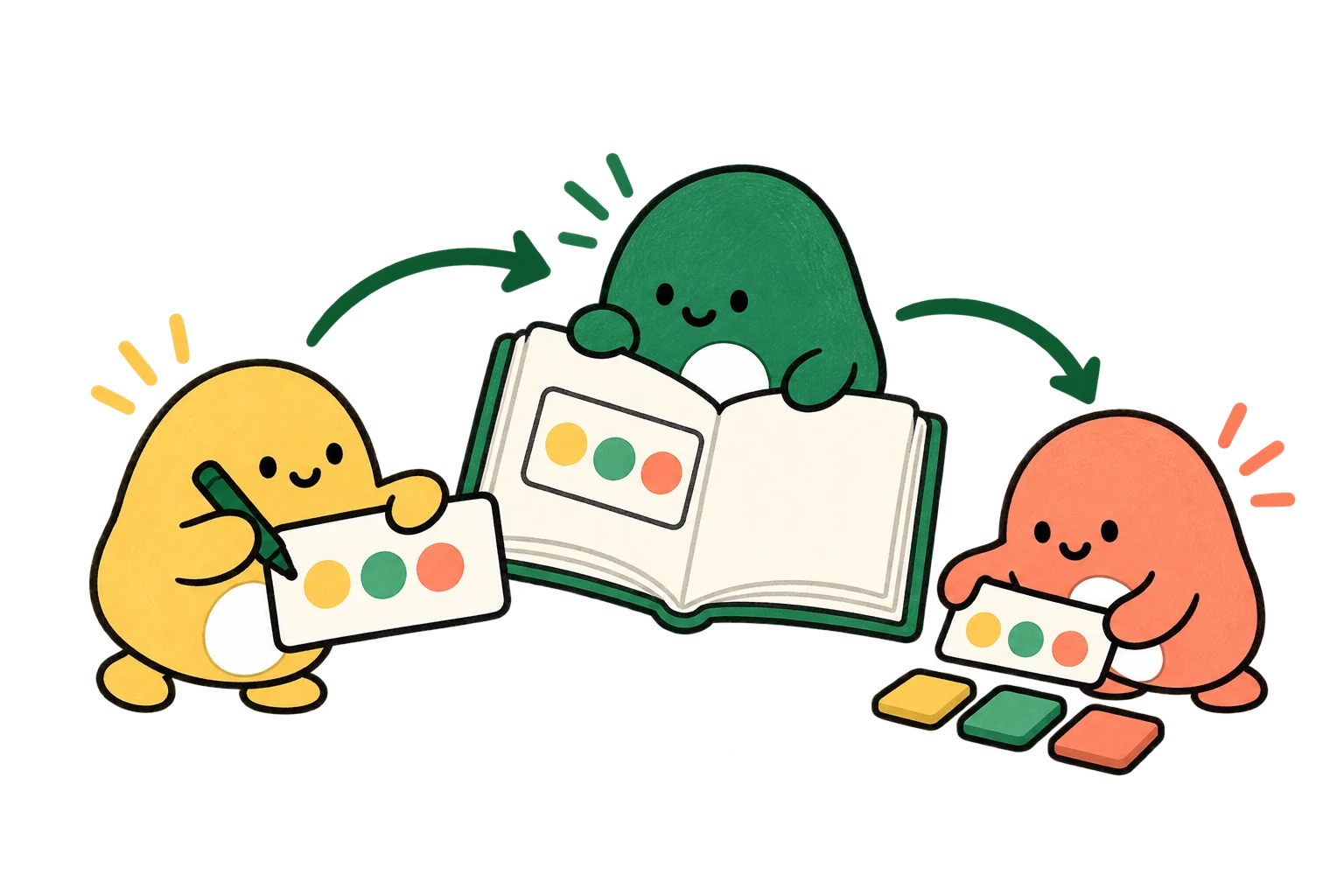
Keep useful facts, lessons, and reusable commands connected. Explore what the brain holds and how knowledge from one task relates to another.
- Claude
- Codex
- Grok
- Gemini
- Open models
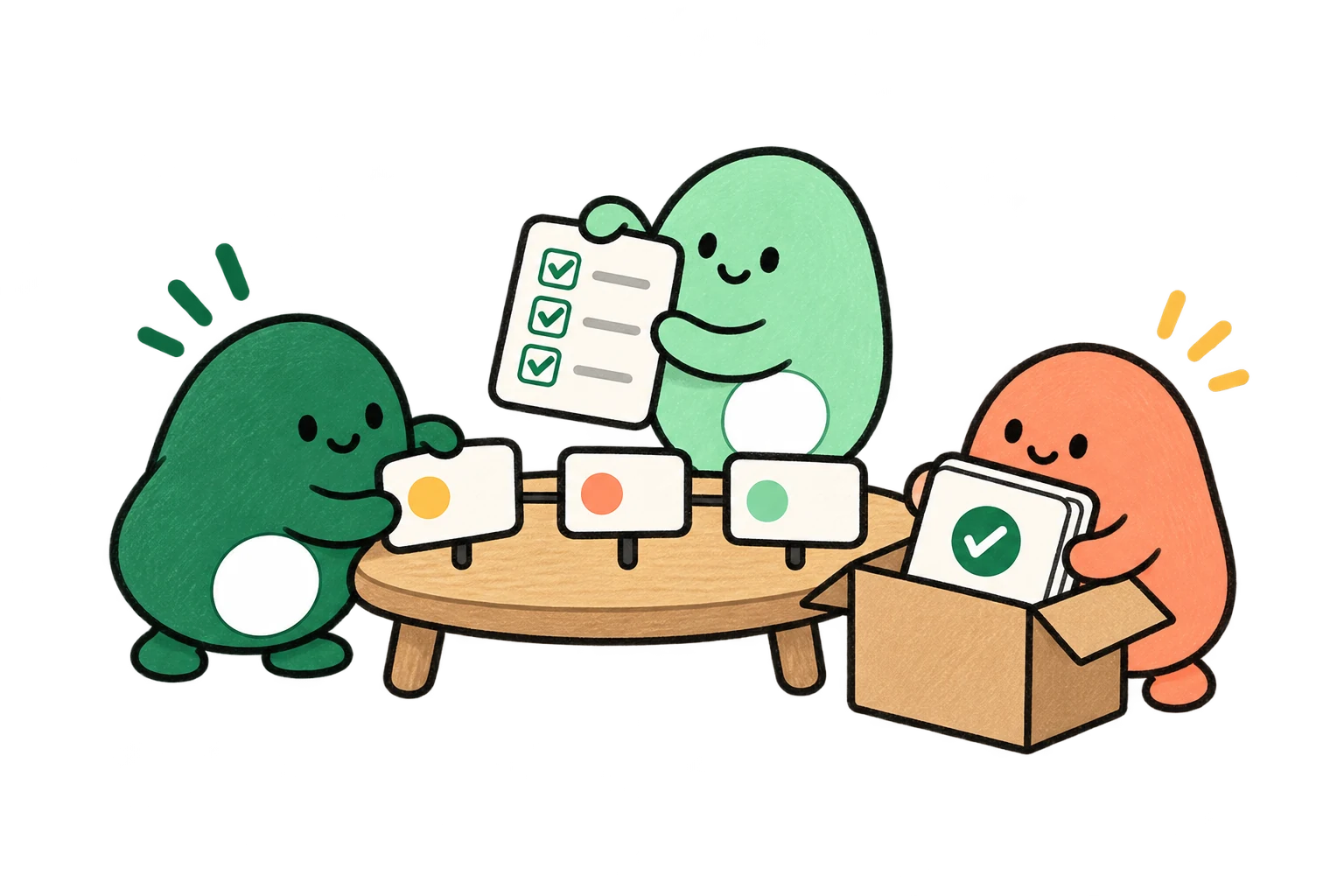
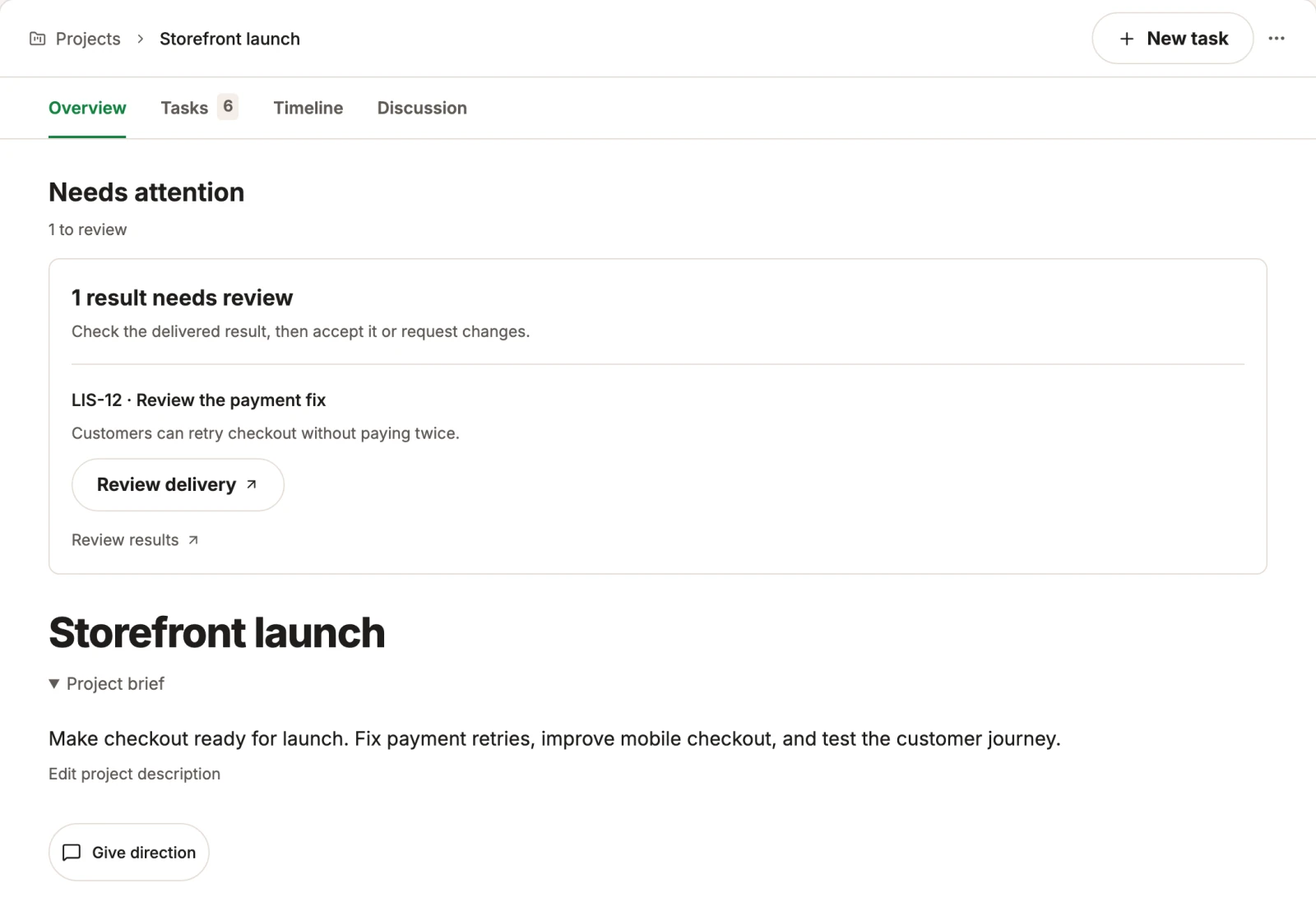
One place for the whole project.
Keep the brief, the work in progress, and the results ready for review together. Give direction without starting the explanation again.
- Claude
- Codex
- Grok
- Gemini
- Open models
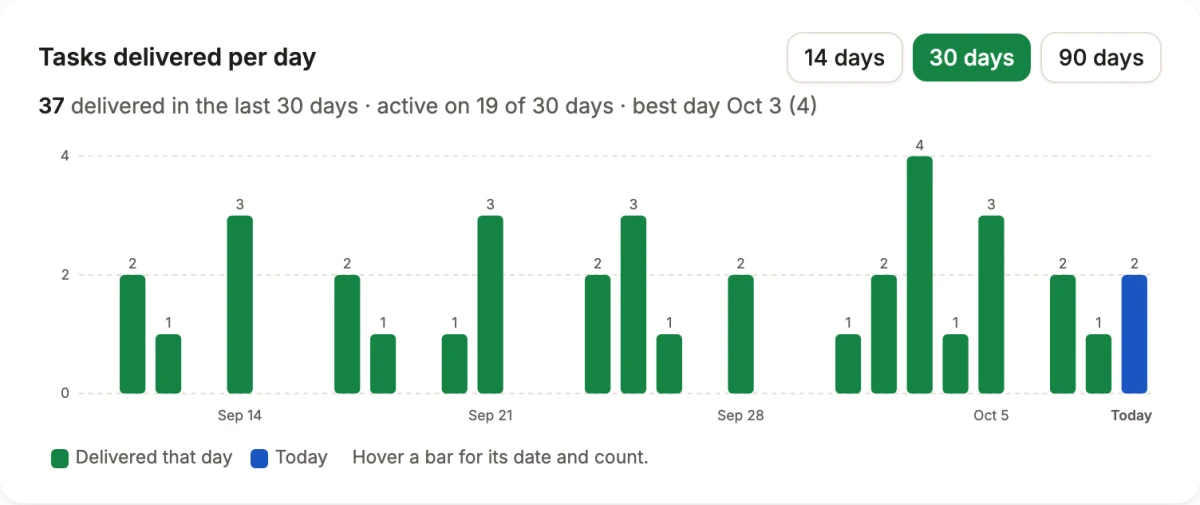
“Improve this. It is not clear.”
That feedback became a focused chart improvement in Lispa: 14, 30, and 90 day views, a labelled count axis, and readable dates. The work also extracted the chart calculations into a separate module.
The change was merged after chart checks and a visual preview covering range selection, hover, and the empty state.
A useful first task,
ready to make yours.
Replace the brackets, paste into a Lispa chat, and keep the scope small enough to review.
- An inventory of affected code and dependencies
- A consistent change within the agreed scope
- Checks plus an explicit list of remaining work
Plan a migration from [old pattern/version] to [new pattern/version] in [scope]. Inspect the target API and all affected callers. Preserve [required behavior]. Implement one representative slice first, run the relevant checks, and report the diff and risks before continuing to the rest. Do not merge.
Start a task in LispaCan Lispa upgrade a dependency?
It can inspect the target API, update code and dependency files, and run your checks. Specify the exact target version and ask it to review the release notes and compatibility changes.
Can I review the plan before a large refactor?
Yes. Ask for an inventory and a proposed sequence before edits, or limit the initial task to one module. The starter prompt uses a representative first slice.
How do I know behavior stayed the same?
State the behavior to preserve and ask for tests that exercise it. Passing checks provide evidence, but do not prove every possible behavior is unchanged. Review the diff and any gaps.
Can I use my existing model plan?
You can connect a supported Claude or ChatGPT plan, a provider API key, or use Lispa’s models with credits. Provider limits still apply. Cloud machines and Lispa services consume credits even when you bring a plan.
Start the cleanup you keep postponing.
Connect your repo. Describe the work.
Come back to a result you can inspect.
Lite starts at $20/month with $20 in usage credits.
Paid plan required to run tasks. Cancel any time.